Senggarang: Chinese Heritage Across the Water from Tanjungpinang
The stilt village of Senggarang, a temple wrapped in banyan roots and the Vihara Avalokitesvara Graha reveal the long presence of the Chinese community on Bintan.


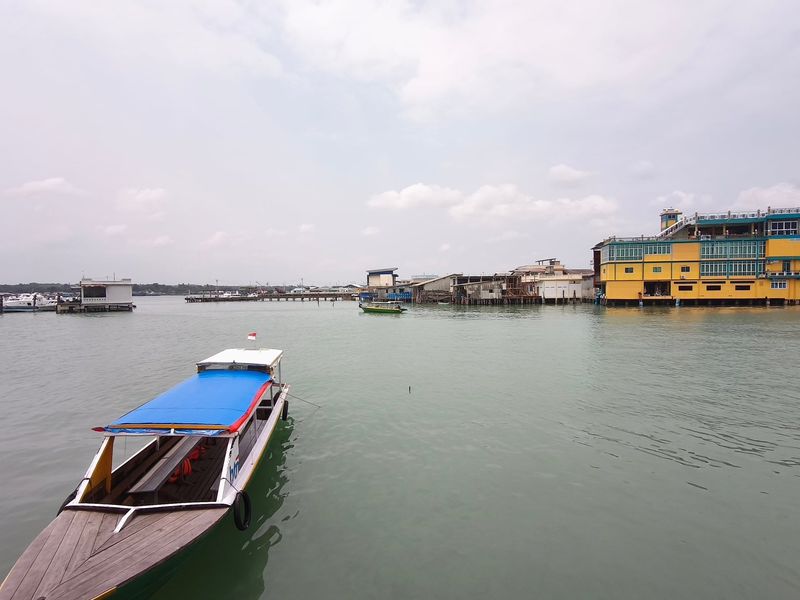
From Tanjungpinang harbour, small wooden boats known as pompong cross to Senggarang in about fifteen minutes. The village on the far side of the bay is regarded as one of the early settlements of Chinese migrants on Bintan, and most residents have Teochew roots. Their wooden houses stand on stilts above the water, linked by plank walkways called pelantar.
The Banyan Tree Temple
Senggarang's best-known sight is a temple almost completely enveloped by the roots of a giant banyan tree. The building was originally the house of a Chinese kapitan and is dated to around 1811. After its owner left, local residents turned it into a place of worship. Over time the roots crept up the pillars, walls and roof until they became part of the structure. The altar inside is still in use, and foreign visitors generally know the site as the Banyan Tree Temple.
Another temple complex stands nearby on the waterfront, so a short walk around Senggarang can take in several shrines.
Life on the water
Strolling along the pelantar offers a glimpse of everyday life: fishing boats, coffee shops and small household altars. Remember that Senggarang is a living village, not a museum, and ask before photographing people or homes.
Vihara Avalokitesvara Graha
Chinese heritage is visible on the mainland too. Vihara Avalokitesvara Graha lies in the Batu 14 area beside the road from Tanjungpinang towards Tanjung Uban. It was inaugurated in June 2009 by Indonesia's then Minister of Religious Affairs. In its main hall sits a gilded Guan Yin statue 16.8 metres tall, recorded by the Indonesian Record Museum (MURI) as the largest seated Guan Yin figure in an indoor space. A nine-storey pagoda has also been built within the complex.
Tips for your visit
- Dress modestly and keep your voice low in temples.
- Do not touch offerings or burning incense.
- The walkways can be slippery after rain, so wear sturdy shoes.