Kota Rebah: Royal Ruins at Hulu Riau
On the Sungai Carang near Tanjung Pinang lie wall remains, ruins and tombs of Johor-Riau dignitaries. A quiet site for history lovers who don't mind a little adventure.


Just a short boat ride up the Sungai Carang from Tanjung Pinang lie the remains of a place that was once among the busiest royal ports of the Malay world. Today it is quiet, green and a little overgrown, which is exactly what gives Kota Rebah its special atmosphere.
A royal centre on the river
According to the Johor chronicles, a new royal settlement was founded in 1673 on the Sungai Carang, in the area known as Hulu Riau. For more than a century it served as a centre of the Johor-Riau kingdom and developed into a major trading port where merchants from many lands met. In 1787 the royal seat moved to Lingga, and the settlement on the river slowly declined.
What remains
The name Kota Rebah means roughly "collapsed wall": kota refers to the fortification wall, rebah to its fallen state. What visitors find today:
- remains of old walls, partly covered with moss and roots
- ruins of a building that researchers interpret as a palace or another important structure
- a large burial ground of kingdom dignitaries, including the tombs of Daeng Marewah and Daeng Celak, the first two Yang Dipertuan Muda of Riau
- an information board at the entrance
Local media describe the site as neglected, so don't expect a museum-style attraction. Its charm lies in the mix of history and wilderness.
How to visit
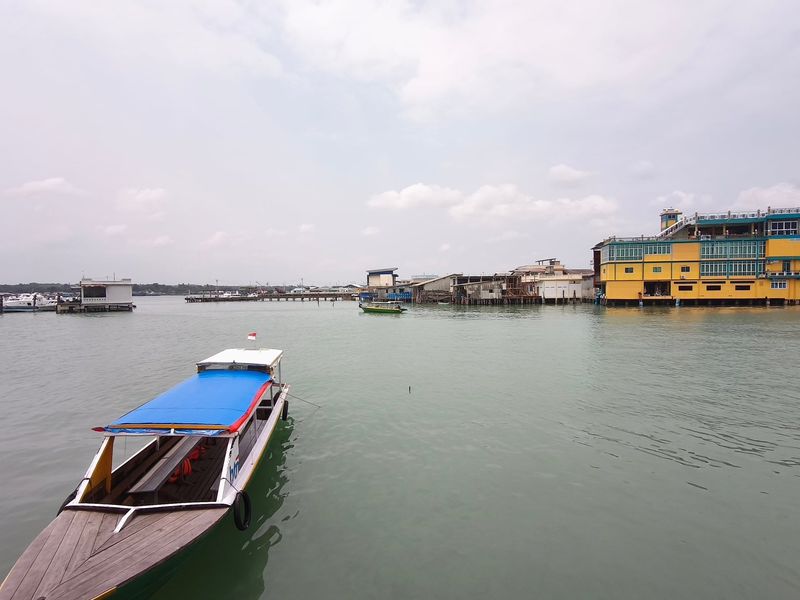
The classic way is by pompong, a small motorboat, from Tanjung Pinang, which takes roughly 15 minutes along the river. The site can also be reached by car or motorbike, though the road route involves a detour because the tombs lie on the other side of the river. Note that in 2025 local reports described the Kota Rebah jetty as badly damaged, so check with local boatmen or the Tanjung Pinang tourism office before you go. Bring insect repellent, water and sturdy shoes, and please treat the graves with respect.